The Operational Significance of High-Latitude Trajectories
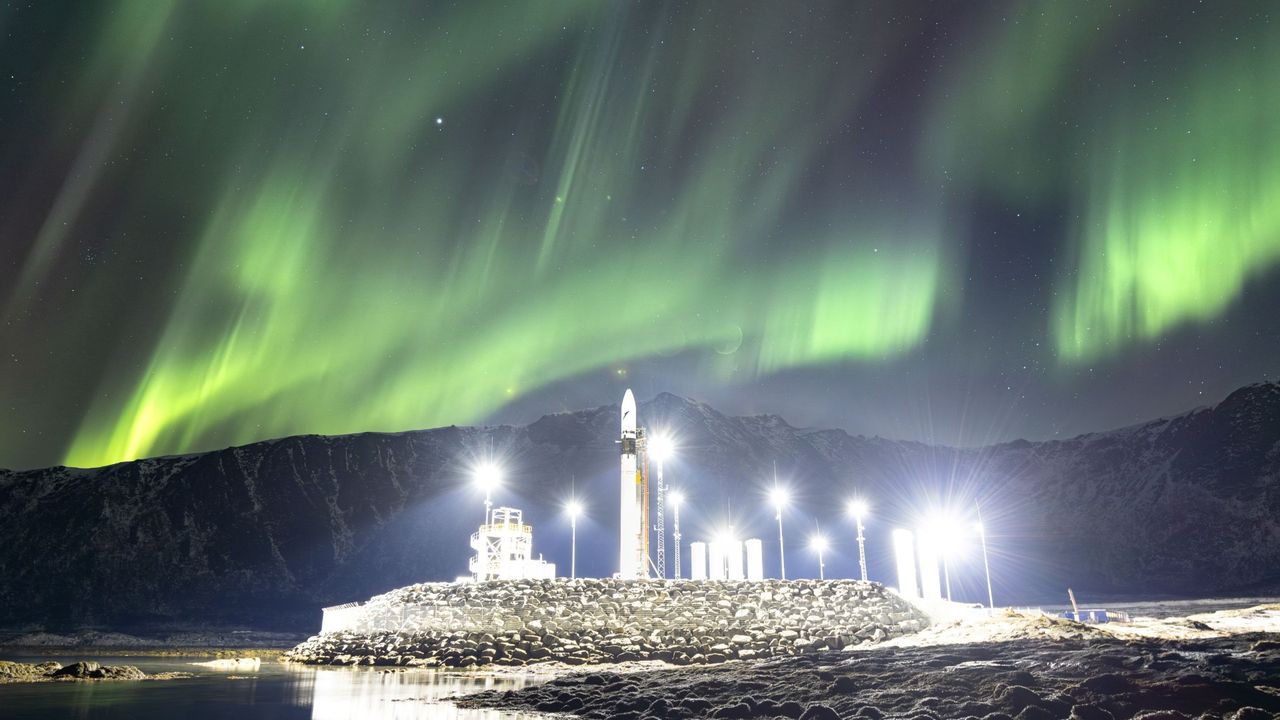
The visual spectacle documented on March 25, 2026, is far more than a triumph of celestial photography; it is a profound indicator of the current state of aerospace logistics and high-latitude operations. As a launch vehicle carves its trajectory through the incandescent glow of the Aurora Borealis, we are witnessing the culmination of decades of research into ionospheric physics and orbital mechanics. This event signifies a pivotal moment where the harsh environmental conditions of the polar regions are no longer barriers, but rather calculated variables in a global supply chain that now extends into the thermosphere.
The strategic importance of high-latitude launch sites, such as those in Scandinavia and northern North America, has surged in recent months. These locations offer unique advantages for sun-synchronous and polar orbits, which are essential for modern earth observation and telecommunications constellations. The imagery of the rocket against the northern lights serves as a visual confirmation of the operational maturity of these sites. It demonstrates that the aerospace industry has reached a level of sophistication where it can synchronize complex countdowns with the unpredictable rhythms of the magnetosphere.
Navigating the Electromagnetic Complexity of the Ionosphere
Deep-dive analysis into the technical requirements of such a launch reveals the extreme complexity of operating within an active aurora. The northern lights are the visible manifestation of intense geomagnetic activity, characterized by a flux of charged particles that can severely disrupt telemetry and GPS-guided navigation systems. For a rocket to maintain its flight path with millimeter precision while traversing these ionized curtains, its onboard avionics must be shielded against electromagnetic interference of the highest order.
This specific mission serves as a critical testbed for real-time adaptive guidance systems. These systems are designed to compensate for the rapid fluctuations in atmospheric density caused by the heating effect of the aurora. By collecting data during this ascent, engineers are gaining unprecedented insights into the interaction between rocket plumes and the plasma environment of the upper atmosphere. This is not merely a scientific endeavor; it is a requirement for the next generation of resilient space infrastructure that must operate regardless of space weather conditions.
Macro-Economic Impacts on the Global Space Supply Chain
The successful integration of launch windows with geomagnetic events has significant implications for the global space economy. As the demand for rapid-response launch capabilities grows, the ability to operate in diverse environmental conditions becomes a key competitive differentiator for commercial providers. This event proves that high-latitude corridors are open for business, even during peak solar activity. This reliability is crucial for defense and intelligence sectors that require constant, uninterrupted access to orbital assets.
Furthermore, the visual impact of this event reinforces the brand value of the organizations involved, positioning them as masters of the most challenging environments on Earth. From a strategic intelligence perspective, we are seeing a shift where environmental mastery is directly correlated with market dominance. The ability to predict, adapt to, and even utilize the conditions of the upper atmosphere allows for more flexible mission profiles. This flexibility reduces the cost of delays and increases the overall cadence of orbital deployments, which is the primary driver of current industrial growth in the space sector.
The Strategic Verdict on Industrial-Environmental Integration
The strategic verdict is clear: the image of a rocket piercing the aurora is a testament to the industrialization of the final frontier. It marks a transition from the era of "conquering" space to "integrating" with the celestial environment. We are no longer passive observers of the heavens; we are active participants who have learned to navigate the complex electromagnetic landscape of our planet's boundary. This mastery is a prerequisite for any nation or corporation seeking to maintain a long-term presence in low Earth orbit.
As we analyze the implications of this March 25 event, it is evident that the synergy between advanced meteorology and aerospace engineering will be the cornerstone of future operations. The aesthetic beauty of the photograph is merely the surface of a deep, structural shift in how humanity accesses the cosmos. The organizations that can thrive under the northern lights are the ones that will lead the global space hierarchy. This is the new standard of excellence: where technology and nature do not clash, but instead operate in a choreographed, highly calculated dance of progress.