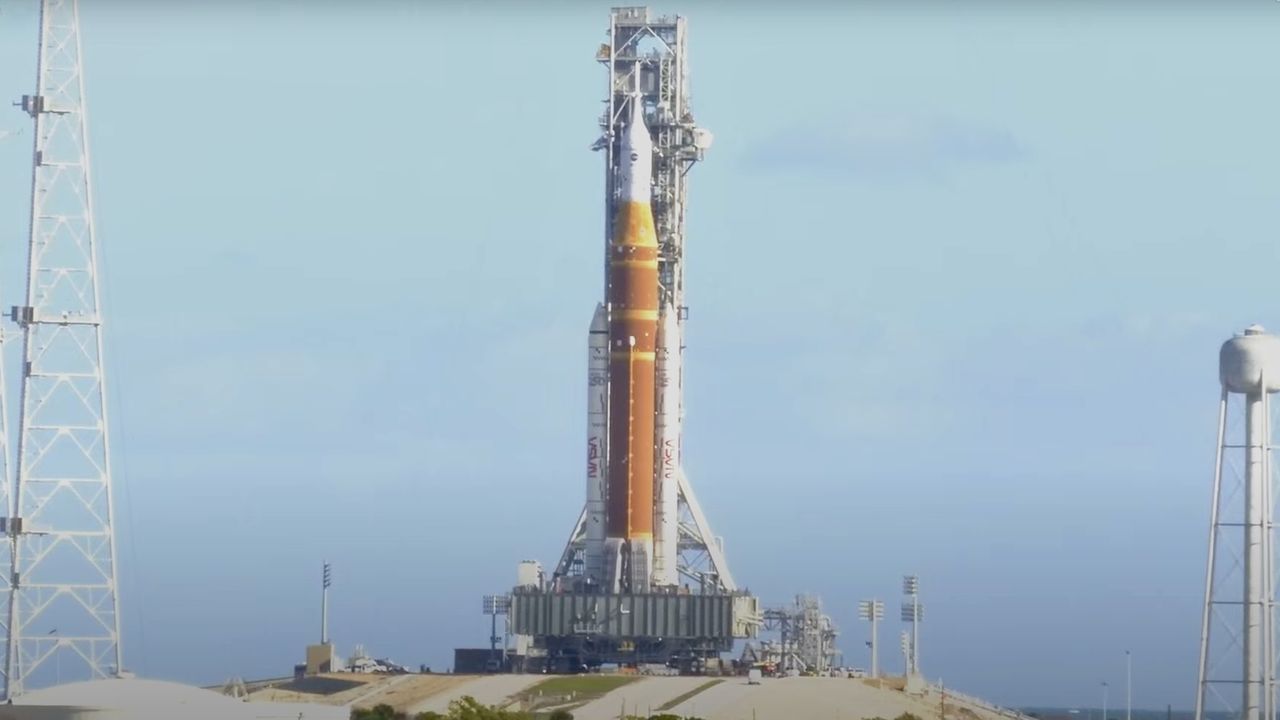
The Re-Emergence of Heavy-Lift Capability at Pad 39B
The physical presence of the Space Launch System (SLS) at Kennedy Space Center’s Launch Pad 39B serves as the most visible indicator of the United States’ current trajectory in deep-space exploration. Following the successful uncrewed mission of Artemis I, the return of this hardware—now designated for the first crewed lunar mission in over half a century—solidifies the operational transition of the Artemis program. This is not merely a transport of machinery; it is the culmination of rigorous post-flight data analysis from its predecessor and the integration of critical life-support systems within the Orion spacecraft. The logistics involved in moving a 322-foot-tall vehicle highlight the immense scale of the SLS architecture, which remains the only flight-proven super-heavy lift vehicle capable of sending humans toward the Moon in the immediate term. This rollout represents a definitive shift from assembly to pre-launch configuration, signaling readiness to the international community.
Engineering Integration and the Complexity of the Human Element
The technical focus now shifts from basic flight dynamics to the intricate synchronization of human-rated systems. Unlike its predecessor, the Artemis II stack incorporates the Environmental Control and Life Support System (ECLSS), a suite of technologies designed to sustain four astronauts for the duration of their lunar flyby. The integration of these systems within the Orion capsule represents a significant leap in complexity. Every umbilical connection on the Mobile Launcher 1 is a testament to the thousands of hours of testing required to ensure crew safety. The current phase involves exhaustive integrated testing that stresses the hardware under cryogenic conditions. This is a cold, calculated engineering endeavor where the margin for error is non-existent, reflecting a mature industrial approach to risk mitigation in the high-stakes environment of crewed spaceflight. The hardware is no longer a test bed but a life-sustaining vessel.
Industrial Resilience and the Macro-Economic Footprint
Beyond the launch pad, the SLS program represents a massive consolidation of the American aerospace industrial base. With prime contractors like Boeing, Northrop Grumman, and Aerojet Rocketdyne, the program sustains a specialized workforce across all fifty states. This industrial inertia provides a stabilizing force in the domestic economy, ensuring that specialized manufacturing capabilities remain sharp. The return to the pad signals to global partners and competitors alike that the U.S. supply chain is fully mobilized. This is a macro-economic statement of intent; the Artemis program is not a singular event but a sustained industrial campaign. The reliance on legacy-derived components, such as the RS-25 engines from the Space Shuttle era, demonstrates a strategic choice to prioritize reliability and proven performance over the volatility of unproven radical innovations in the current operational window. This stability is the bedrock of contemporary space policy.
The Strategic Imperative of Operational Continuity
The arrival of the Artemis II rocket at its launch site is the definitive closing of the gap between development and execution. In the current geopolitical climate, maintaining a presence in cislunar space is a matter of strategic priority. The SLS architecture, despite its fiscal scrutiny, provides the heavy-lift reliability required for the immediate mission objectives. The strategic verdict here is one of calculated persistence. By moving the hardware into position, NASA is committing to a timeline that demands flawless execution from both the public sector and its industrial partners. This moment defines the current era of space power: it is characterized by the ability to move massive infrastructure into place and maintain the rigorous standards of human-rated certification. The focus remains squarely on the successful execution of the upcoming crewed mission, which will serve as the ultimate validation of this multi-billion dollar strategic investment and reinforce the established order of lunar exploration.