The Australian Frontier and the Race for Range
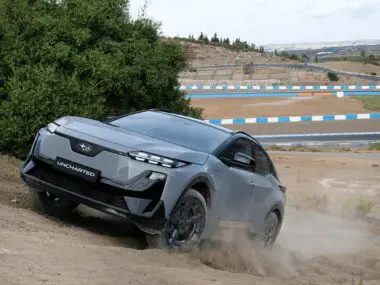
Subaru’s recent announcement regarding the launch of a smaller electric AWD SUV in Australia represents a critical evolution in its global electrification roadmap. This move is not merely an expansion of the product lineup; it is a calculated response to the specific logistical and psychological demands of the Australian consumer.
In a market characterized by vast distances and a growing but still developing charging infrastructure, the 500km range threshold is the new baseline for viability.
The introduction of this compact SUV follows the initial rollout of the Solterra, signaling Subaru's intent to capture a broader demographic within the SUV segment. By targeting a smaller footprint, Subaru is positioning itself to compete in the high-volume urban and suburban sectors where maneuverability is prized, yet the capability for long-range regional travel remains non-negotiable.
This strategic placement ensures that the brand remains relevant to its core audience: those who demand reliability beyond the city limits.
Translating Mechanical Legacy into Digital Torque
The core challenge for Subaru lies in the transition from its legendary Boxer engine and mechanical Symmetrical AWD system to a dual-motor electric configuration. For decades, the brand’s identity has been inextricably linked to the physical balance and tactile feedback of its drivetrain.
In the present context, the engineering focus has shifted toward software-defined torque vectoring that can replicate, or even enhance, the off-road prowess Subaru owners expect.
Developing a compact SUV that maintains these characteristics while housing a battery pack capable of exceeding 500km requires sophisticated thermal management and energy efficiency. The collaboration with industrial partners remains a cornerstone of this development, yet Subaru is under immense pressure to ensure the driving dynamics remain distinct.
The Australian environment, with its extreme temperatures and varied terrain from coastal highways to unsealed outback roads, serves as the ultimate proving ground for this new electric architecture.
Market Dynamics and the Competitive Landscape
The Australian EV market is currently witnessing a surge in competition, particularly from established players and aggressive new entrants from Asia. Subaru’s decision to prioritize a high-range, smaller SUV is a direct counter-maneuver against the dominance of mid-sized electric crossovers.
By offering a 500km+ range in a more compact form factor, Subaru is addressing a gap in the market for users who want premium AWD capability without the bulk of a full-sized vehicle.
Furthermore, this launch is a strategic effort to retain brand loyalists who are ready to transition to zero-emission vehicles but have remained hesitant due to 'range anxiety.' The 500km mark is a powerful psychological tool in the Australian context, as it covers the distance between major regional hubs on a single charge.
This tactical advantage is essential for maintaining market share in a region where the outdoor lifestyle is a primary driver of vehicle purchasing decisions.
The Verdict on Subaru’s Regional Survival
Ultimately, the success of this smaller electric SUV will define Subaru’s trajectory in the Oceania region. It is a litmus test for whether the brand can successfully decouple its rugged, adventurous image from the internal combustion engine.
The focus on AWD is not just a marketing gimmick; it is a fundamental requirement for the brand’s survival in a market that values utility and safety above all else.
As the automotive industry undergoes this rapid transformation, Subaru is proving that it can adapt without sacrificing its core values. The 500km range compact SUV is the physical manifestation of this adaptation—a bridge between the heritage of the past and the demands of the present.
By securing its position in Australia with a high-performance, high-range EV, Subaru is reinforcing its commitment to remaining a dominant force in the global mobility landscape.