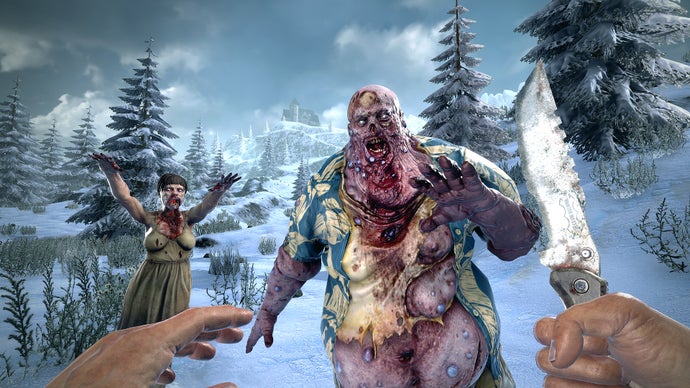
A Seismic Shift in the Survival Landscape
The gaming world just felt a massive tremor. Behaviour Interactive, the Canadian giant known for the asymmetrical horror phenomenon Dead by Daylight, has officially acquired The Fun Pimps, the creators of the legendary 7 Days to Die. For those of us who have spent thousands of hours in the voxel-based trenches of Navezgane, this isn't just a corporate merger; it is a monumental shift in the trajectory of one of the most resilient indie games in history.
This acquisition comes at a pivotal moment. 7 Days to Die recently shed its 'Alpha' skin to launch its 1.0 version, but as any veteran survivor knows, the game still carries the weight of a decade's worth of technical debt and unfulfilled promises. The Fun Pimps have done the impossible by keeping a community engaged for 12 years, but the sheer scale of their vision has often outpaced their resources.
By joining forces with Behaviour, the team now has access to a level of infrastructure and live-service expertise that was previously out of reach. We aren't just talking about more money; we are talking about a massive influx of engineering talent, quality assurance resources, and global publishing power. This is the moment where the 'jank' that defined the early access era can finally be polished into the diamond we've always seen beneath the rough. It is a validation of the survival genre's enduring power.
The Long Road from Alpha to Legend
Let’s be real: 7 Days to Die has been a labor of love, frustration, and absolute addiction. We’ve watched the game evolve through countless iterations, from its humble blocky beginnings to the complex, physics-driven survival simulation it is today. The Fun Pimps have always been transparent about their struggles, and that honesty is what built such a fiercely loyal fanbase. However, the '1.0' tag felt to many like a necessary milestone rather than a final destination.
The game has always occupied a unique space. It combines the creative freedom of Minecraft with the visceral tension of a hardcore zombie shooter. But the performance issues, the occasional game-breaking bugs, and the slow pace of console updates have been persistent thorns in the side of the community. We've loved it not because it was perfect, but because there was nothing else like it.
The acquisition signals that the '1.0' launch was never meant to be the end of the road. Instead, it was a foundation for what comes next. Behaviour Interactive understands the horror genre better than almost anyone in the industry. They know how to maintain a game for the long haul, as evidenced by Dead by Daylight’s near-decade of dominance. Seeing that same level of care and consistent content delivery applied to 7 Days is a dream come true for those of us who live for the Blood Moon.
The Synergy of Two Horror Titans
What does Behaviour actually bring to the table? First and foremost, they bring stability. Dead by Daylight is a masterclass in cross-platform integration and consistent seasonal updates. 7 Days to Die has historically struggled with keeping the PC and console versions in sync, often leaving console players years behind. With Behaviour’s resources, the dream of true parity and seamless cross-play is no longer a distant hope—it is a logical next step in the game's evolution.
Furthermore, Behaviour has a proven track record of collaborating with major horror IPs. Imagine the potential for crossover events or high-fidelity asset updates that don't tank your frame rate. The Fun Pimps will remain the creative heart of the project, but they now have a massive support system to handle the heavy lifting of optimization and backend networking that has historically slowed them down.
This partnership also suggests a broader strategy for Behaviour. They are clearly looking to diversify their portfolio beyond the asymmetrical space, and 7 Days to Die is the perfect candidate. It has a massive, built-in audience and a gameplay loop that is infinitely expandable. For us players, this means the 'endgame' content we’ve been theorizing about for years—bandits, deeper lore, and more complex faction systems—might finally arrive with the polish they deserve. The potential for a more robust live-service model is finally within reach.
What This Means for Our Next Blood Moon
As a fan, it’s easy to be skeptical of big acquisitions. We’ve seen smaller studios lose their soul when swallowed by giants. But this feels different. The Fun Pimps have already proven they won't compromise on their vision; they stayed independent for 12 years just to ensure the game stayed true to its roots. This sale isn't an exit strategy; it's an acceleration strategy. They’ve taken the game as far as they could on their own, and now they are passing the torch to a partner who can help them cross the finish line.
We should expect to see a significant uptick in the frequency of quality-of-life updates. The technical hurdles that have plagued the voxel engine—especially regarding large-scale base collapses and high-count zombie hordes—are exactly the kind of problems that Behaviour’s engineering teams thrive on solving. We are looking at a future where the game runs as smoothly as it plays.
The verdict is clear: 7 Days to Die is entering its most exciting chapter yet. The 'Alpha' era is dead, and the era of the 'Ultimate Survival Epic' has begun. Whether you are a veteran who has survived a thousand nights or a newcomer just building your first wooden frame, the future of the apocalypse has never looked brighter. Grab your club, sharpen your arrows, and get ready—the next Blood Moon is going to be something truly special. The Fun Pimps and Behaviour are about to show us what this game was always meant to be.